Free Shipping Sitewide | 1 Year Warranty

Beginner’s Guide to Operating Construction Equipment Safely
Master the basics of safe equipment operation with our beginner operator guide. Discover essential construction equipment safety tips to protect your crew.
4/1/20266 min read
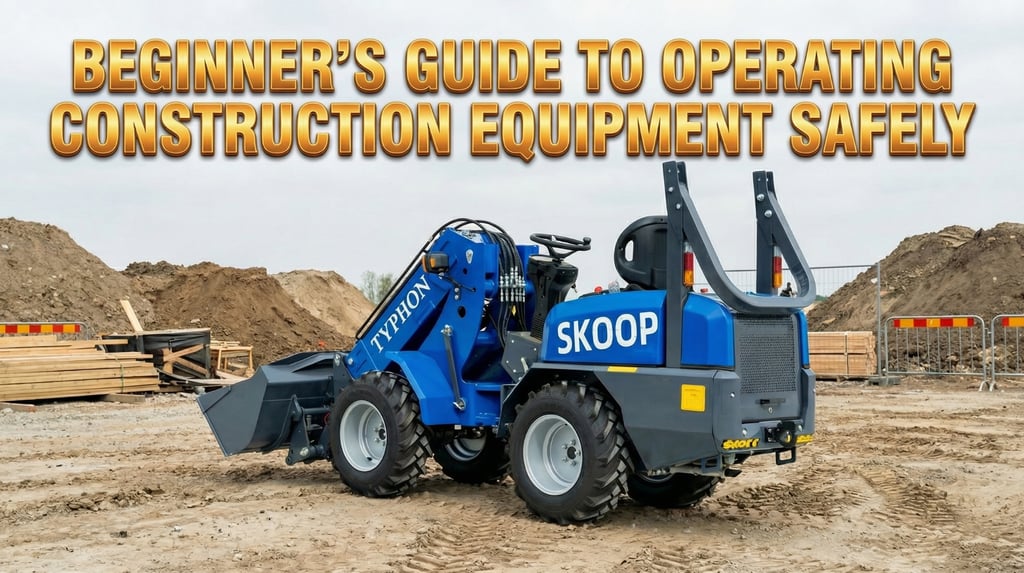
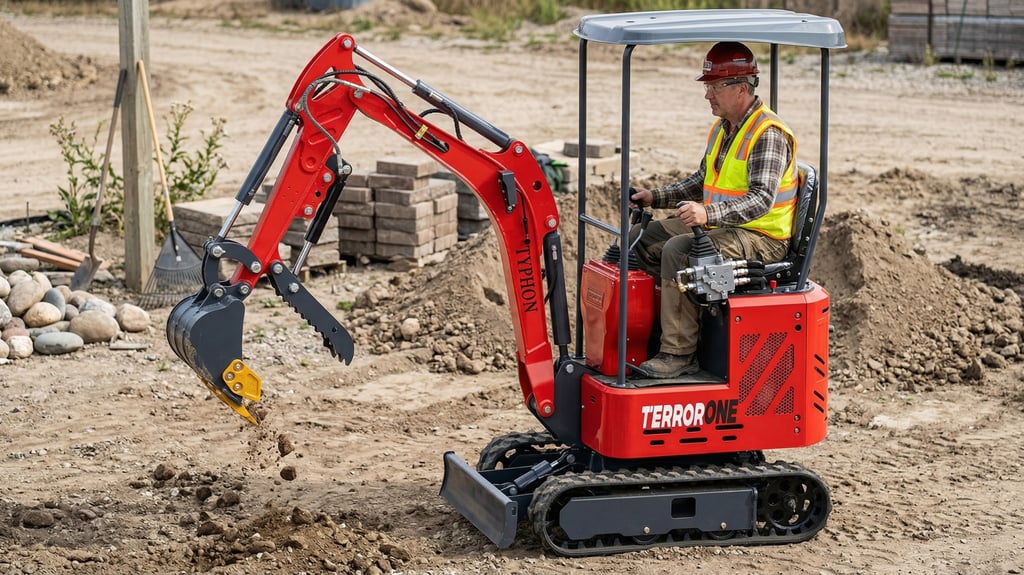
Getting into the cab of a heavy earthmoving machine for the first time can feel overwhelming. You’re in control of powerful equipment that can reshape an entire site in just a few hours. But with that power comes serious responsibility. Experienced operators know that respecting the machine is the foundation of doing the job well.
Heavy equipment doesn’t leave room for careless mistakes. Even a brief lapse in attention can lead to major damage or serious injury. That’s why having a consistent, disciplined routine is essential for staying safe on a busy job site.
This beginner-friendly guide walks you through the basics of safe equipment operation. You’ll learn why pre-operation inspections matter, how to get comfortable with the controls, and what habits help prevent accidents. By following these proven safety practices, you can build confidence, protect your team, and start your journey as a skilled operator the right way.
tips, you will protect your life, safeguard your company's assets, and build a highly respected professional reputation.
The Foundation of Safe Equipment Operation
Before you even touch a starting key, you must adopt the correct mindset. Safety is not an optional checklist you rush through at the end of the day. It is a continuous, deliberate practice that dictates every single movement you make on the job site.
Prioritizing Professional Training
Never attempt to operate a piece of heavy machinery without receiving formal, comprehensive training. Watching another operator from a distance does not qualify you to take the controls. Every machine features unique blind spots, specific lifting capacities, and distinct hydraulic responses.
Professional training programs teach you the exact mechanical limits of the equipment. You learn how to interpret lifting charts and understand the physical physics of weight distribution. Bypassing this crucial educational step guarantees you will push the machine beyond its engineered capabilities, leading to dangerous tip-overs or mechanical failures.
Reading the Operator's Manual
The operator's manual is the most important tool stored inside the cabin. Many beginners ignore this dense book, assuming all heavy machinery operates on the exact same principles. This assumption is entirely false and highly dangerous.
You must read the manual cover to cover before operating a new piece of equipment. The manufacturer outlines specific safety warnings, precise maintenance intervals, and emergency shutdown procedures. Understanding these technical specifications ensures you operate the machine exactly as the engineers intended.
Mandatory Pre-Operation Checks
A safe shift begins long before you start the diesel engine. The physical condition of your machine changes daily due to extreme job site stress. Conducting a rigorous walkaround inspection allows you to identify potential mechanical failures before they turn into active emergencies.
Inspecting Fluids and Engine Components
Start your daily routine by checking all vital fluid levels. Pull the dipsticks for the engine oil and hydraulic fluid, and visually inspect the coolant reservoir. Operating a machine with low hydraulic fluid causes severe internal damage and makes the boom movements highly unpredictable.
Look underneath the chassis for any fresh puddles of oil or coolant. A small drip might seem insignificant, but a blown high-pressure hydraulic hose can violently spray hot oil across the job site. Catching these leaks early protects your safety and prevents expensive environmental cleanup fines.
Examining the Undercarriage and Tires
The undercarriage bears the entire weight of the machine and the payload. Walk around the tracks or tires and look for severe structural damage. Check rubber tires for deep cuts, exposed steel belts, or dangerously low air pressure.
If you operate a tracked machine, clear out any heavy mud or rocks packed tightly into the sprocket assemblies. Debris buildup forces the tracks to stretch dangerously tight, leading to sudden snaps. Verify that all lug nuts are secure and that the heavy steel pivot pins remain properly greased.
Understanding Basic Controls and Cabin Safety
Once you complete your exterior inspection, you must secure your environment inside the cab. The cabin serves as your protective shell in the event of a rollover or falling debris. Treating this space with professional respect is non-negotiable.
Securing Your Seatbelt
Fastening your seatbelt is the absolute most critical action you will take all day. Heavy machinery frequently navigates steep slopes, deep ruts, and unstable ground. If the machine tips over, the seatbelt keeps you securely inside the reinforced rollover protection structure (ROPS).
Operators who fail to wear their seatbelts are frequently ejected from the cab during a rollover. The massive weight of the machine then crushes them as it tumbles. Never move a machine a single inch until your seatbelt clicks securely into place.
Mastering the Joysticks and Pedals
Modern construction equipment relies on highly sensitive electro-hydraulic controls. As a beginner, you must learn to operate these joysticks with smooth, deliberate precision. Jerking the controls causes the heavy boom to bounce violently, destabilizing the entire machine.
Spend your first few hours in an open, empty area of the job site. Practice raising the bucket, swinging the cab, and driving forward at the lowest possible engine RPM. Build your muscle memory slowly before you attempt to lift heavy materials or work near other crew members.
Maintaining Unwavering Safety Awareness
An active construction site is a chaotic environment. Dump trucks back up, ground workers carry heavy materials, and deep trenches open up unexpectedly. Safe equipment operation requires total, unbroken situational awareness.
Managing Severe Blind Spots
Every wheel loader, excavator, and dozer suffers from massive blind spots. You cannot rely purely on your mirrors or backup cameras to keep the area clear. The massive rear counterweight completely obscures your vision directly behind the machine.
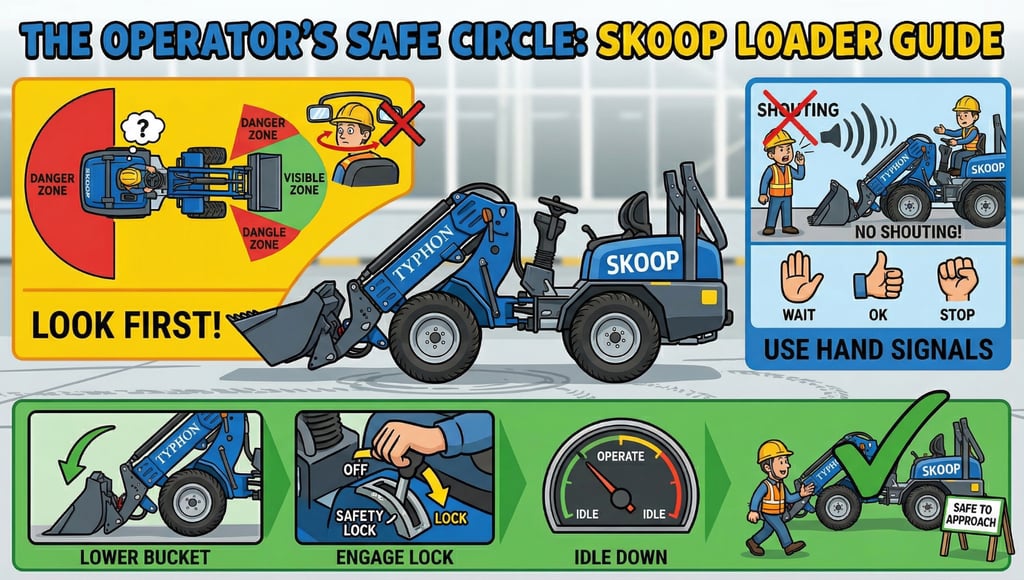
Before you back up or swing the cab, you must physically turn your head and verify the path is clear. If you lose sight of a ground worker, stop the machine instantly. Never assume a worker moved out of your way; wait for them to re-establish direct eye contact before resuming your work.
Communicating With Ground Crews
Clear communication prevents fatal accidents. Establish a standardized set of hand signals with your ground crew before the shift begins. The noise of a massive diesel engine drowns out verbal shouts, making visual signals your only reliable form of communication.
Never allow anyone to approach your machine while the implements are moving. If a worker needs to speak with you, lower your bucket entirely to the ground, engage the hydraulic safety lock, and idle the engine down. This protocol ensures the machine cannot move accidentally while the worker stands in the danger zone.
Navigating Job Site Hazards
The ground beneath your tracks changes constantly throughout the day. Rain turns solid clay into slick mud, and deep excavations create severe drop-offs. You must actively assess the terrain before you drive over it.
Respecting Slopes and Grades
Driving heavy machinery across a steep slope is incredibly dangerous. Always drive straight up or straight down a hill to maintain a low center of gravity. Driving horizontally across the face of a slope places the machine's heavy weight on the downhill tracks, leading to an immediate lateral rollover.
Keep your heavy attachments low to the ground when traveling. Raising a loaded bucket high into the air shifts the center of gravity upward, making the machine incredibly top-heavy. Keep the load just a few inches off the dirt to maximize your stability.
Watching for Overhead and Underground Utilities
Power lines represent a massive, invisible threat. You must maintain a strict minimum clearance distance from all overhead electrical lines. If your boom strikes a live wire, the massive electrical current will travel straight down the steel arm and into the cab.
Likewise, you must verify that all underground utilities are clearly marked before you break ground. Striking a buried gas main or a high-voltage conduit causes deadly explosions. Always respect the painted utility markings and dig with extreme caution when operating near known utility corridors.
Proper Shutdown and Securing Procedures
Your responsibility for the machine does not end when the whistle blows. Securing the equipment properly prevents vandalism, theft, and accidental movement after hours. A professional operator leaves the machine in perfect condition for the next shift.
Lowering All Attachments
Never leave a bucket, fork, or heavy attachment suspended in the air. Hydraulic pressure naturally bleeds off over time. If a hose fails overnight, the heavy steel implement will crash to the ground, crushing anything sitting underneath it.
Always lower the bucket completely flat against the dirt. This removes all pressure from the hydraulic cylinders and anchors the machine firmly to the ground.
Engaging Safety Locks and Brakes
Once the attachments rest safely on the ground, idle the engine for a few minutes to let the turbocharger cool down. Engage the heavy parking brake and activate the hydraulic control lockout lever. This physical lockout prevents the joysticks from moving if someone bumps them while climbing out of the cab.
Turn off the battery disconnect switch and lock the cabin doors securely. Taking these final steps protects your employer's massive capital investment and ensures the job site remains completely secure overnight.
Conclusion
Mastering safe equipment operation takes time, patience, and relentless discipline. By respecting the raw power of the machinery and prioritizing strict safety protocols, you protect your life and the lives of everyone working around you. Never let complacency replace your professional caution.
Use this beginner operator guide as the foundation of your daily routine. Commit to performing thorough pre-operation checks, wearing your seatbelt constantly, and maintaining absolute situational awareness. These fundamental habits separate careless amateurs from highly respected, professional operators.
Review your operator's manual tonight and memorize the specific lifting charts for your assigned machine. Ask your site supervisor to clarify any job site hazards or blind spots you feel unsure about. By actively pursuing these construction equipment safety tips, you will build a long, successful, and incident-free career in the heavy equipment industry.
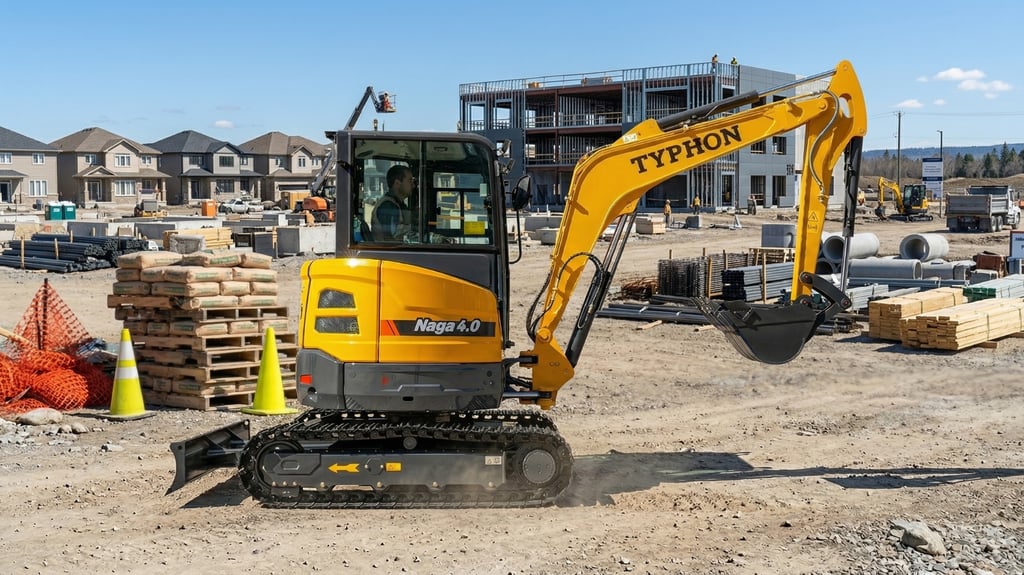
Leading provider of heavy equipment solutions in the US such as mini excavator diggers and skid steers. When looking for a reliable mini excavator supplier, look for New Excavator. Quality compact mini excavators backed by a strong after sales service and a widespread inventory of spares.
Contact us for equipment inquiries
© 2026. All rights reserved USA EXCAVATORS
Follow us now