Free Shipping Sitewide | 1 Year Warranty

Excavator Attachments: A Practical Guide for Buyers and Operators
Learn the most common excavator attachments, what they are used for, and how to choose the right attachment for digging, demolition, grading, and more.
4/24/20266 min read
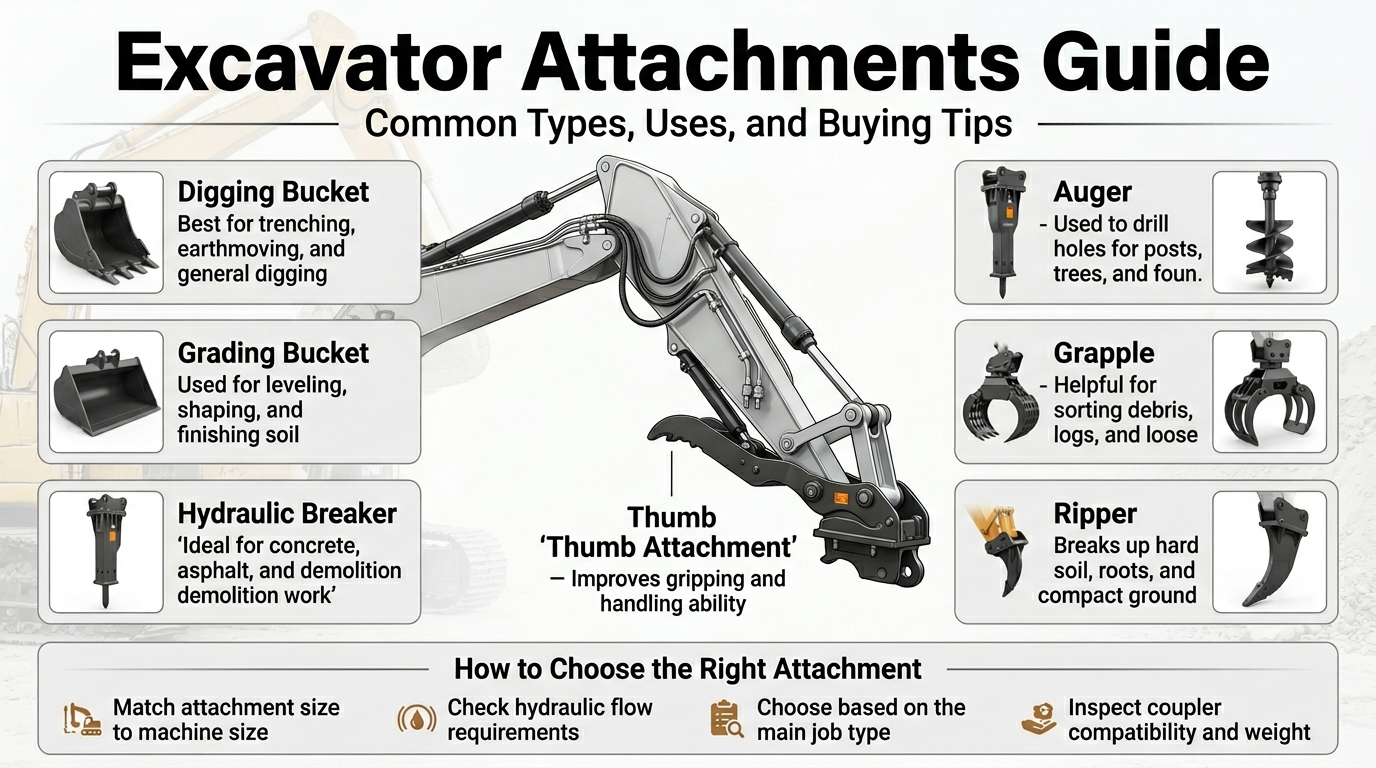
Excavator attachments help one machine handle many different jobs. With the right attachment, an excavator can dig, break concrete, drill holes, grab debris, compact soil, clear brush, or shape a jobsite. This is why many contractors and equipment owners look closely at attachments before buying or renting a machine.
The right setup can save time and reduce the need for extra equipment. The wrong setup can slow down the job, damage the machine, or create safety problems. This guide explains the most common excavator attachments, how they are used, and what buyers should check before choosing one.
What Are Excavator Attachments?
Excavator attachments are tools that connect to the end of an excavator arm. They replace or work with the standard bucket to give the machine more functions.
A basic digging bucket is useful, but it cannot do every task well. For example, breaking concrete with a bucket is rough on the machine and not very effective. A hydraulic breaker is made for that job. Digging fence post holes with a bucket takes longer than using an auger. Moving logs or scrap is easier with a grapple than with a plain bucket.
Attachments can be simple mechanical tools or hydraulic tools powered by the excavator’s hydraulic system. Smaller excavators usually use lighter attachments, while larger machines can handle heavier tools with more force.
Before choosing any attachment, the first question should be simple: what job does the machine need to do most often?
Common Excavator Attachments and What They Do
Different excavator attachments are made for different types of work. Some are used every day, while others are more specialized.
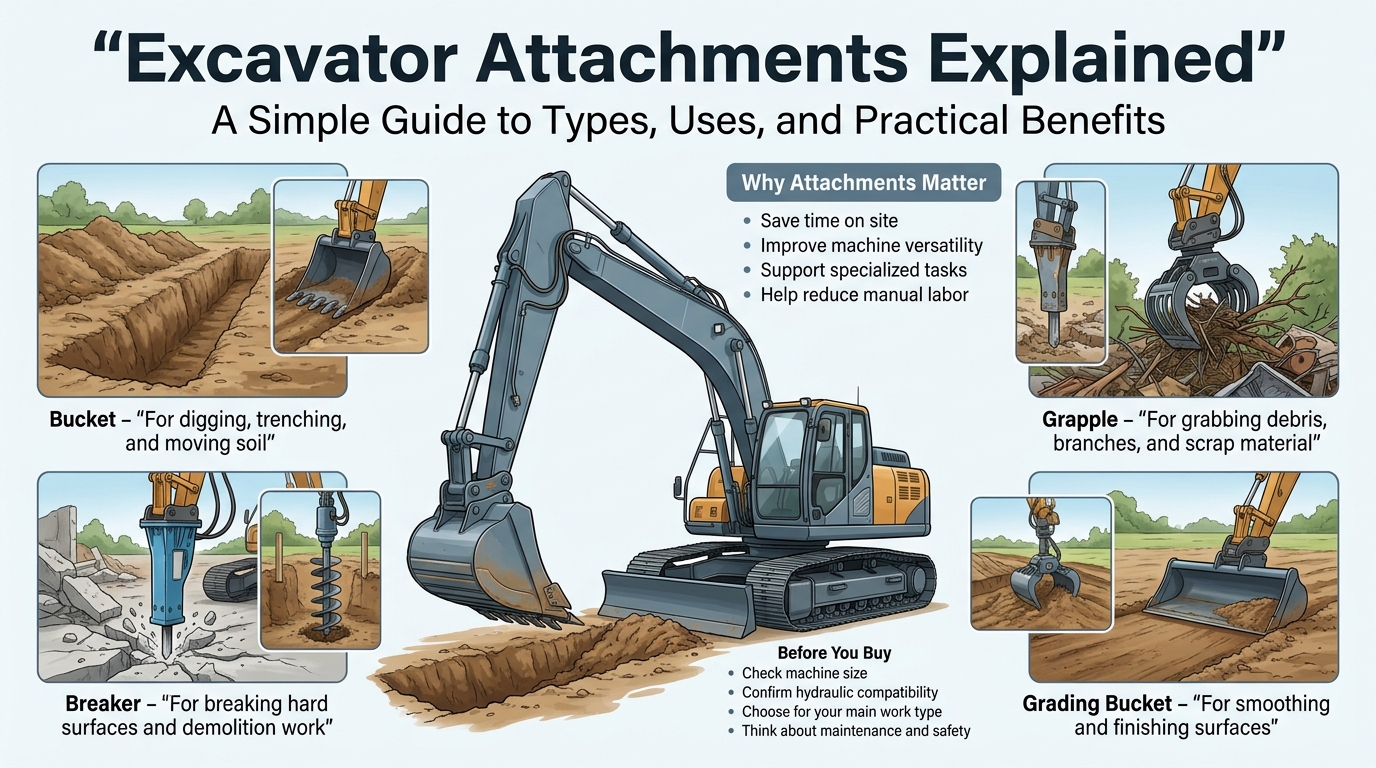
Digging buckets are the most common attachment. They are used for trenching, foundation work, utility digging, drainage, and general earthmoving. Bucket width matters. A narrow bucket is better for trenches, while a wider bucket can move more material.
Grading buckets are wider and usually have a smooth edge. They are used for leveling soil, cleaning ditches, backfilling, and finishing surfaces. They are not made for hard digging, but they are useful for cleanup and shaping.
Hydraulic breakers are used to break concrete, asphalt, rock, and hard ground. They are common in demolition, road repair, and renovation work. A breaker must match the excavator’s hydraulic flow and operating weight.
Augers drill holes in soil. They are useful for fence posts, tree planting, sign posts, foundation holes, and landscaping work. Auger bit size should match the job and the soil condition.
Thumb attachments help the bucket grab objects. A thumb is useful for lifting rocks, logs, branches, pipe, scrap, and demolition debris. A hydraulic thumb gives more control than a fixed thumb.
Grapples are made for grabbing and sorting material. They are often used in land clearing, recycling, forestry, demolition, and waste handling. Grapples work well when the job involves irregular material that is hard to scoop.
Rippers are used to loosen hard soil, frost, roots, or compacted ground before digging. A ripper tooth can break up tough material more easily than a bucket.
Compaction wheels and plate compactors are used to compact soil in trenches, around foundations, and in tight areas. These attachments are useful after utility work or backfilling.
Brush cutters and mulchers are used for clearing vegetation. They are helpful for roadside work, land clearing, property maintenance, and drainage areas. These attachments need proper hydraulic power and strong guarding.
How Excavator Attachments Improve Jobsite Work
The main benefit of excavator attachments is flexibility. One excavator can handle several tasks without bringing in a separate machine for every job.
For a small contractor, this can make a big difference. A mini excavator with a bucket, breaker, auger, and thumb can handle trenching, light demolition, hole drilling, and cleanup. That can reduce rental costs and make the machine useful on more jobs.
Attachments can also improve job quality. A grading bucket gives a cleaner finish than a digging bucket. A compactor attachment can compact soil in narrow trenches where a larger roller cannot fit. A thumb can handle rocks and debris with better control.
They also help with speed. Using the right tool means fewer passes, less machine strain, and less manual labor. For example, using an auger for post holes is usually faster and cleaner than digging each hole with a bucket.
Still, attachments are not magic fixes. A small excavator cannot safely carry an oversized attachment. A weak hydraulic system cannot run a demanding tool well. The attachment needs to match the machine and the job.
Choosing the Right Attachment for Your Machine
Choosing excavator attachments should start with machine size. Every excavator has limits for weight, lifting capacity, hydraulic flow, and attachment size.
A heavy attachment on a small excavator can make the machine unstable. It may reduce digging reach, slow down movement, and put extra stress on the boom, arm, pins, and hydraulic system. A tool that is too small for the machine may also be inefficient.
Check these points before buying:
The attachment should match the excavator’s operating weight class. Most attachment suppliers list the machine size range for each tool.
The pin size, pin spacing, and coupler type must fit the machine. If the machine uses a quick coupler, make sure the attachment is compatible.
The hydraulic requirements must match the excavator. This is especially important for breakers, augers, compactors, grapples, and brush cutters.
The attachment weight should not make the machine front-heavy. Stability matters, especially when working on slopes, soft ground, or near trenches.
The job type should guide the choice. A landscaping company may need an auger, grading bucket, and thumb. A demolition contractor may need a breaker, grapple, and sorting bucket. A utility crew may need trenching buckets and compaction tools.
It is better to buy fewer useful attachments than many tools that rarely get used.
Hydraulic Attachments: What Buyers Should Check
Many excavator attachments need hydraulic power. These tools depend on oil flow and pressure from the excavator. If the hydraulic match is wrong, the attachment may perform poorly or damage parts.
Hydraulic flow is measured by how much oil the machine can send to the attachment. Some tools need low flow, while others need higher flow. A brush cutter or mulcher usually needs more hydraulic power than a simple thumb.
Hydraulic pressure also matters. Pressure affects force. If the pressure is too low, the attachment may feel weak. If the attachment is not rated for the machine’s pressure, seals and hoses can fail.
Operators should also check whether the excavator has one-way or two-way auxiliary hydraulics. A breaker may use one-way flow, while a thumb, grapple, or auger often needs two-way flow.
Hydraulic couplers and hoses should be in good condition. Dirty connectors can push contamination into the hydraulic system. Damaged hoses can leak or burst under pressure.
Before using a hydraulic attachment, read the attachment manual and the excavator manual. It may sound basic, but this step prevents many expensive mistakes.
Safety Tips When Using Excavator Attachments
Attachments change how an excavator moves, lifts, and reacts. Operators should treat each attachment as a different tool, not just another bucket.
Always inspect the attachment before work. Look for cracked welds, loose pins, worn teeth, damaged hoses, and missing safety locks. A loose attachment can become dangerous quickly.
Keep workers away from the swing area and the attachment’s working zone. Breakers can throw chips. Brush cutters can throw debris. Grapples can drop material if the load shifts.
Do not lift more than the machine can safely handle. A thumb or grapple can make it tempting to pick up large rocks, logs, or concrete pieces. The machine may lift the load at first, then become unstable when the boom moves.
Use the right attachment for the task. Do not use a bucket as a hammer. Do not use a grading bucket for heavy ripping. Do not use a breaker like a pry bar. Misuse can damage the attachment and the excavator.
For hydraulic tools, relieve pressure before connecting or disconnecting hoses. Wear gloves and eye protection when handling hydraulic lines.
Good attachment safety is mostly about control. Work slowly, keep the machine stable, and do not force the tool beyond its purpose.
Maintenance Tips to Keep Attachments Working Well
Excavator attachments work in dirt, rock, mud, dust, and heavy impact. Regular maintenance keeps them useful and helps avoid downtime.
Grease pins and bushings as recommended. Attachments with moving parts, such as thumbs, grapples, and couplers, need proper lubrication. Dry pins wear faster and can become expensive to repair.
Check bucket teeth and cutting edges. Worn teeth reduce digging power and put more strain on the excavator. Replace broken or badly worn teeth before they damage the bucket structure.
Inspect hydraulic hoses and fittings. Look for leaks, cracks, rubbing marks, and loose connections. A small hydraulic leak can become a bigger problem under pressure.
Clean hydraulic couplers before connecting them. Dirt in the hydraulic system can damage pumps, valves, and seals.
For breakers, check the tool bit, bushings, nitrogen pressure if required, and grease points. Breakers take heavy impact, so they need more attention than basic attachments.
Store attachments on firm, level ground when not in use. Keep hydraulic hoses capped and off the dirt. A simple storage routine can extend the life of the tool.
Conclusion
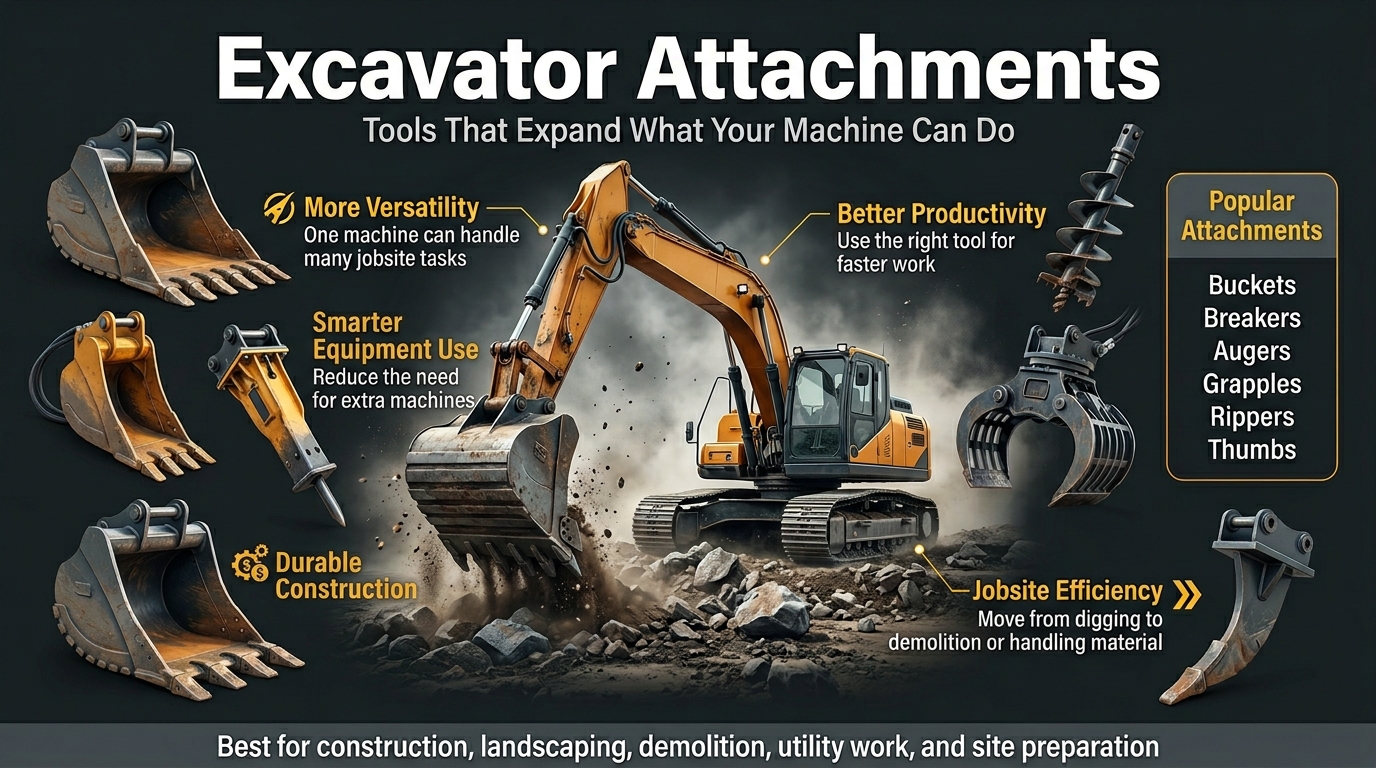
Excavator attachments can make one machine much more useful, but the best attachment is the one that fits the job, the machine, and the operator’s needs. Buckets, breakers, thumbs, augers, grapples, compactors, and cutters all have their place.
Before buying, check machine size, coupler fit, hydraulic requirements, attachment weight, and real jobsite use. A well-matched attachment can save time, improve work quality, and reduce the need for extra equipment.
Leading provider of heavy equipment solutions in the US such as mini excavator diggers and skid steers. When looking for a reliable mini excavator supplier, look for New Excavator. Quality compact mini excavators backed by a strong after sales service and a widespread inventory of spares.
Contact us for equipment inquiries
© 2026. All rights reserved USA EXCAVATORS
Follow us now