Free Shipping Sitewide | 1 Year Warranty

Farm Land Clearing with a Skid Steer Mulcher
Discover the benefits of using a skid steer mulcher for farm land clearing. Learn how this powerful attachment boosts efficiency and improves soil health.
3/7/20265 min read
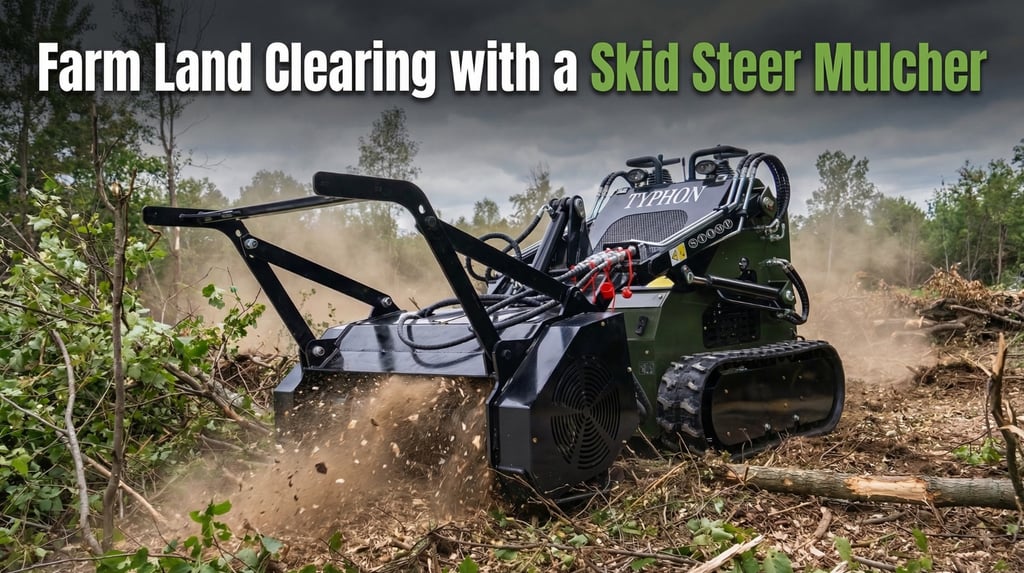
Reclaiming overgrown farmland or preparing a new plot for cultivation presents a significant challenge. Dense brush, invasive species, and small to medium-sized trees can render valuable acreage unusable, requiring a robust and efficient solution to bring the land back into production. While traditional methods like bulldozing or manual clearing have their place, they often involve extensive labor, high costs, and potential damage to the soil structure. A more modern and increasingly preferred approach involves the strategic use of a skid steer equipped with a forestry mulcher attachment.
This combination transforms a compact, maneuverable skid steer into a land-clearing powerhouse. It offers a unique balance of strength, precision, and environmental benefit that is particularly well-suited for agricultural applications. A forestry mulcher doesn't just cut down vegetation; it shreds and processes it on the spot, turning unwanted growth into a beneficial layer of mulch.
For farmers and landowners, understanding how this technology works is key to unlocking new levels of productivity. This guide will explore the process of farm land clearing with a skid steer mulcher, highlighting its efficiency, cost-effectiveness, and the long-term advantages it provides for soil health and land management.
How a Skid Steer Mulcher Revolutionizes Land Clearing
A forestry mulcher, also known as a brush cutter or masticator, is a heavy-duty rotary attachment designed to shred vegetation. When mounted on a high-flow skid steer, it becomes a mobile unit capable of navigating varied and uneven terrain. The mulcher head contains a spinning drum fitted with hardened steel or carbide teeth, which pulverizes trees, stumps, and thick brush upon contact.
Unlike other methods that require multiple steps—cutting, piling, and then burning or hauling away debris—a skid steer mulcher accomplishes the task in a single pass. The operator can drive directly into an area of dense overgrowth, processing material as the machine moves forward. The result is a clean, level surface covered in a layer of organic mulch, ready for the next stage of preparation. This one-step process is the core of its efficiency.
This method is highly selective. An operator can target specific invasive species while leaving desirable mature trees untouched. This level of control is nearly impossible with a bulldozer, which tends to clear everything in its path indiscriminately. For farm applications, this precision is invaluable for managing fence lines, creating firebreaks, or selectively clearing pastures without disturbing the entire ecosystem.
The Advantages of Efficiency and Speed
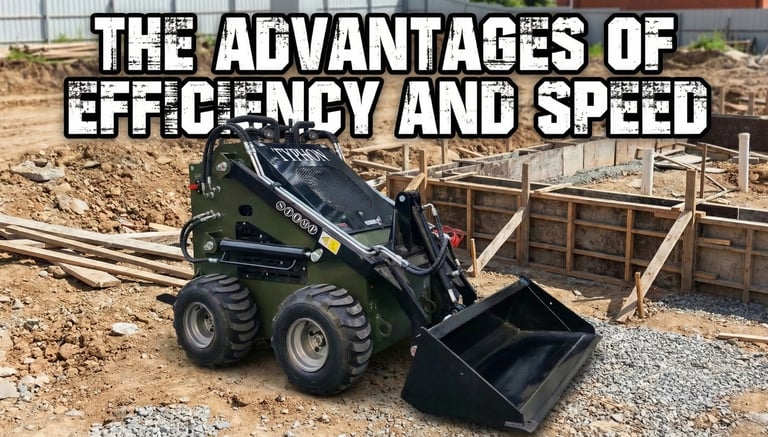
Time is a critical resource in agriculture. The window for preparing land for planting is often narrow, and delays can impact an entire season's yield. The speed of a skid steer mulcher is one of its most compelling benefits. A single operator can clear several acres of moderate-to-heavy brush in a day, a task that could take a crew of workers with chainsaws and chippers a week or more to complete.
This speed translates directly into cost savings. While the initial investment in a skid steer and mulcher attachment is significant, the reduction in labor hours is substantial. You are no longer paying a full crew for days of physically demanding work. Instead, one skilled operator accomplishes the job faster and with less physical risk.
Furthermore, the process eliminates the need for additional equipment rentals. There is no need for a chipper to process felled trees or a dump truck to haul away debris. The skid steer mulcher is a self-contained clearing system. This consolidation of equipment not only reduces rental costs but also simplifies job site logistics, minimizing the operational footprint on your property.
Enhancing Soil Health and Preventing Erosion
Perhaps the most significant long-term benefit of mulching for farm applications is its positive impact on the soil. Traditional land clearing methods like bulldozing often involve scraping and removing the topsoil along with the vegetation. This practice strips the land of its most fertile layer and can lead to severe soil compaction and erosion.
Mulching, by contrast, is a restorative process. As the mulcher shreds vegetation, it deposits the resulting organic material directly onto the ground. This layer of mulch serves several vital functions. First, it acts as a natural erosion blanket, protecting the exposed soil from being washed away by rain or blown away by wind. This is especially important when clearing sloped or hilly terrain.
Second, the mulch layer helps to retain soil moisture by reducing evaporation. This creates a more stable and hospitable environment for new crops. Over time, the mulch decomposes, breaking down into rich organic matter that enriches the topsoil with essential nutrients. In essence, you are taking the biomass of the unwanted vegetation and recycling it back into the soil, improving its fertility for future planting. This process also helps to suppress the regrowth of weeds, reducing the need for chemical herbicides.
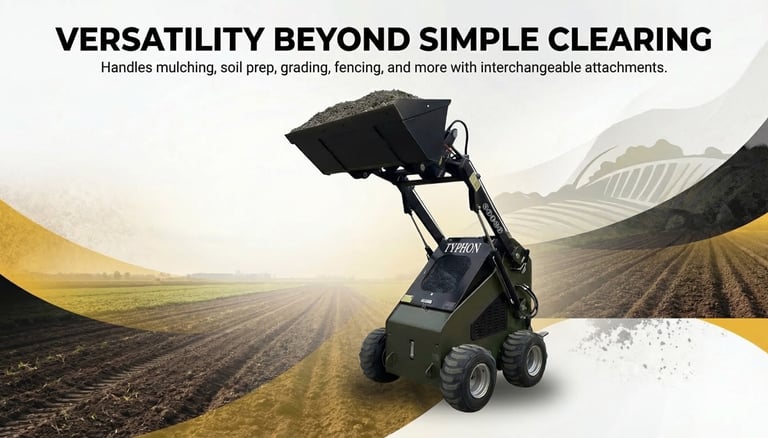
Versatility Beyond Simple Clearing
A skid steer is known as the Swiss Army knife of heavy equipment for a reason. Its value extends far beyond the mulching process. Once the land is cleared, the same skid steer can be fitted with a variety of other attachments to continue preparing the land for agricultural use.
After mulching a field, you can quickly swap the mulcher head for a rotary tiller to break up the soil and mix the fresh mulch into the top layer. You can then switch to a grading attachment to level the field or a rock bucket to remove any large stones that were uncovered. If you need to install fencing around your newly cleared pasture, an auger attachment can drill post holes in a fraction of the time it would take manually.
This versatility means your initial investment in the skid steer provides year-round value across countless farm tasks. It can be used for moving hay bales, cleaning barns, maintaining gravel roads, and even snow removal in the winter. This multi-function capability makes the total cost of ownership far more reasonable than purchasing a dedicated, single-purpose machine.
Considerations for Effective Mulching
To achieve the best results, it is important to match the equipment to the job. A high-flow hydraulic system on the skid steer is essential. Forestry mulchers are power-intensive attachments that require a continuous and robust flow of hydraulic fluid to operate at peak efficiency. Attempting to run a large mulcher on a standard-flow machine will result in poor performance and can potentially damage the equipment.
The type of teeth on the mulcher head also matters. Carbide teeth are more durable and better suited for rocky terrain where contact with the ground is likely. Steel teeth provide a finer, more uniform mulch but are more easily damaged by rocks. Assessing your land and choosing the appropriate tooth configuration will ensure optimal performance and longevity of the attachment.
Conclusion
For the modern farmer, farm land clearing with a skid steer mulcher is not just an alternative method; it is a strategic upgrade. It offers a faster, more cost-effective, and environmentally sound way to reclaim and manage property. By turning unwanted vegetation into a valuable soil-enhancing resource, it supports sustainable agricultural practices while boosting operational efficiency.
The combination of a powerful skid steer and a forestry mulcher provides the versatility to handle the entire land preparation process with a single machine. From initial clearing to final grading and fencing, this dynamic duo reduces labor costs, saves time, and improves the long-term health of your most valuable asset: your land. If you are looking to expand your usable acreage or manage existing pastures more effectively, investing in this technology is a decision that can pay dividends for seasons to come.
Leading provider of heavy equipment solutions in the US such as mini excavator diggers and skid steers. When looking for a reliable mini excavator supplier, look for New Excavator. Quality compact mini excavators backed by a strong after sales service and a widespread inventory of spares.
Contact us for equipment inquiries
© 2026. All rights reserved USA EXCAVATORS
Follow us now