Free Shipping Sitewide | 1 Year Warranty

How to Fix Overheating in Construction Equipment
Learn how to fix overheating machinery with our practical guide. Discover causes and essential cooling system maintenance tips to protect your fleet.
3/21/20267 min read
A high-temperature warning light on your dashboard is never something to ignore. When a heavy-duty engine overheats, it can quickly disrupt your entire project timeline and cause serious damage inside the machine. Excessive heat can wear out seals, crack cylinder heads, and in worst cases, cause complete engine failure. That’s why understanding construction equipment overheating and how to respond to it is essential for every operator and fleet manager.
Overheating is one of the most common issues in heavy equipment, especially in demanding job site conditions where machines run for long hours under heavy loads. Factors like low coolant levels, blocked radiators, hydraulic system strain, or poor airflow can all contribute to rising engine temperatures. If not addressed early, these problems can lead to costly repairs and unexpected downtime that slows down your entire operation.
In this guide, you’ll learn practical and easy-to-follow solutions for diagnosing and fixing overheating issues in heavy machinery. We’ll walk you through the key causes of engine overheating, from mechanical failures to maintenance-related problems, and show you how to take immediate action before the situation gets worse. You’ll also discover essential heavy equipment maintenance tips, including how to properly inspect cooling systems, monitor fluid levels, and keep components clean for optimal performance.
By taking a proactive approach to heavy equipment maintenance and responding quickly to warning signs, you can protect your machinery, reduce repair costs, and keep your projects running smoothly. Preventing overheating not only extends the lifespan of your equipment but also ensures better efficiency, improved safety, and maximum productivity on every job site.
Recognizing the Early Warning Signs
Heavy equipment rarely overheats without offering a few subtle clues first. Catching these early warning signs allows operators to take action before permanent mechanical damage occurs. The most obvious indicator is the temperature gauge climbing steadily toward the red zone. Modern machines also feature audible alarms and digital dashboard warnings that trigger when internal temperatures exceed safe operating limits.
Beyond the digital displays, operators must rely on their physical senses to monitor machine health. A distinct, sweet smell emanating from the engine compartment often indicates burning antifreeze. You might also hear unusual hissing sounds or notice white steam billowing from beneath the engine canopy. If you observe any of these symptoms, you must treat the situation as an immediate mechanical emergency.
Empowering your crew to recognize and report these signs is the first line of defense against catastrophic failures. A well-trained operator knows that ignoring a high-temperature alarm even for a few minutes can result in thousands of dollars in repair bills.
Common Causes of Construction Equipment Overheating
Several distinct factors can push an engine past its thermal limits. Identifying the root cause requires a basic understanding of how heavy-duty thermal regulation works.
Low Coolant Levels and Hidden Leaks
The thermal management system relies on a precise mixture of water and antifreeze to absorb and carry heat away from the engine block. If this fluid drops below the required minimum level, the system loses its ability to transfer heat effectively. Low fluid levels represent the most frequent cause of construction equipment overheating on busy job sites.
Fluid loss usually stems from a physical breach in the system. Heavy vibrations and constant exposure to the elements cause rubber hoses to become brittle and crack. Small punctures in the radiator core or failing water pump seals also create slow, hidden leaks. Even a minor drip can drain the reservoir over the course of a long work week, eventually starving the engine of the fluid it needs to survive.
Clogged Radiators and Airflow Restrictions
Heavy machinery operates in highly abrasive, dirty environments. Loaders, excavators, and bulldozers constantly kick up thick clouds of dust, dirt, and organic debris. Over time, this airborne material gets sucked directly into the radiator fins.
The radiator relies on a constant flow of ambient air to cool the hot fluid circulating inside it. When mud and dust pack into the tight metal fins, they create a solid barrier that completely chokes off the necessary airflow. Without fresh air passing through the core, the fluid retains its heat, and the engine temperature climbs rapidly.
Mechanical Failures and Broken Belts
Sometimes, the fluid levels are perfect, and the radiator is completely clean, yet the machine still overheats. In these cases, a mechanical failure within the thermal management circuit is likely to be to blame. The water pump serves as the beating heart of the system, physically pushing the fluid through the engine block. If the pump's internal impeller degrades, fluid circulation stops entirely.
Similarly, the engine fan plays a critical role in pulling cool air through the radiator. This fan connects to the engine via a heavy-duty rubber belt. If this belt snaps or stretches too far, the fan stops spinning. A stuck thermostat can also trap hot fluid inside the engine block, preventing it from reaching the radiator to cool down.
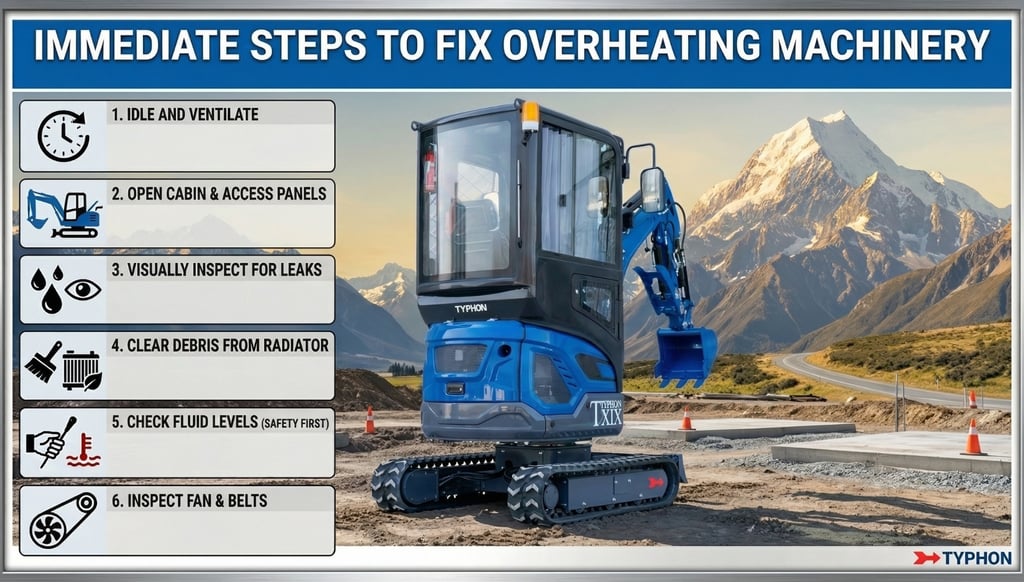
Immediate Steps to Fix Overheating Machinery
When the temperature gauge spikes, the actions you take in the next five minutes determine whether the engine survives. Knowing exactly how to fix overheating machinery begins with a safe, controlled shutdown procedure.
Stop Operating and Reduce the Load
The moment an overheating alarm sounds, stop digging, lifting, or pushing immediately. Disengage the hydraulic attachments and park the machine safely on level ground. Do not shut the engine off right away. Instead, drop the engine speed down to a low idle.
Allowing the engine to idle with no load helps circulate the remaining coolant through the block. This steady, low-speed circulation prevents the internal parts from experiencing a rapid, damaging temperature shock. Let the machine idle for three to five minutes while monitoring the temperature gauge to see if it begins to drop.
Shut Down and Let It Cool
If the temperature does not drop after a few minutes of idling, or if you see active steam or massive fluid leaks, shut the engine off completely. Remove the key from the ignition and step out of the cab.
Now, you must exercise extreme patience. Never attempt to open the radiator cap while the engine is hot. The fluid inside is under immense pressure and sits at boiling temperatures. Removing the cap prematurely will cause a violent eruption of scalding steam and liquid, resulting in severe physical injuries. You must wait for the engine block to cool to the touch before attempting any physical inspections.
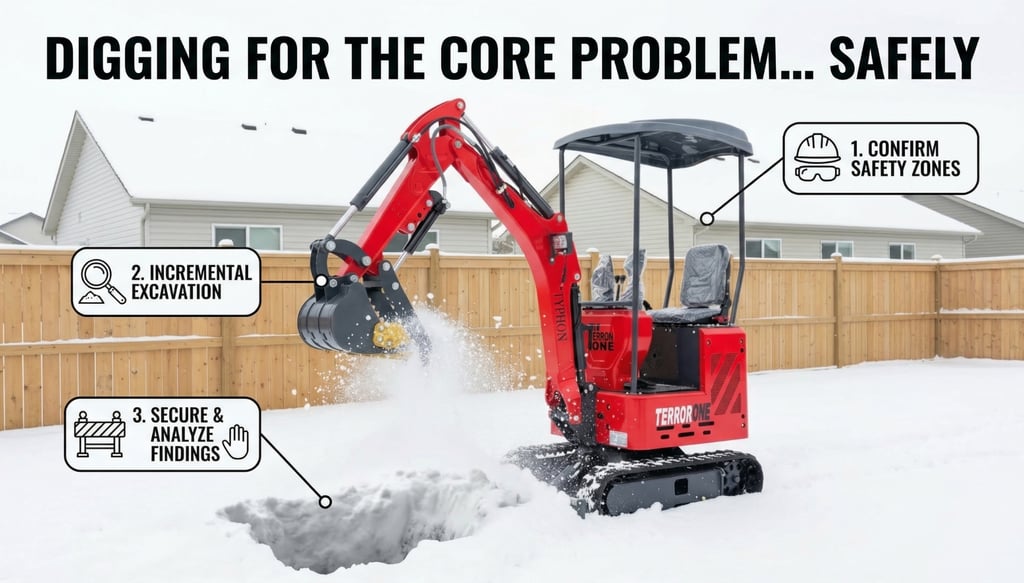
Diagnosing the Core Problem Safely
Once the machine has cooled entirely, you can begin your diagnostic checks safely. Wear heavy-duty work gloves and protective eyewear before opening the engine compartment.
Checking Fluid Levels and Inspecting for Leaks
Start by locating the semi-transparent overflow reservoir and checking the fluid level against the marked indicators. If the reservoir is completely bone dry, you likely have a leak. Carefully remove the cold radiator cap and look inside. If you cannot see fluid near the top of the filler neck, you need to add a pre-mixed solution of water and heavy-duty antifreeze.
Next, trace the path of the thick rubber hoses connecting the radiator to the engine block. Squeeze the hoses firmly to check for soft spots, deep cracks, or brittle sections. Inspect the ground directly beneath the water pump and the radiator for fresh puddles. Identifying the exact source of a leak helps you determine if a simple hose replacement will solve the problem or if you need to order a new water pump.
Examining the Radiator Core and Fan Belts
Shine a bright flashlight directly onto the front face of the radiator. Look closely at the delicate metal fins. If they look completely caked in mud or packed with job site debris, you have found a major airflow restriction.
While you have the engine bay open, locate the main fan belt. Press down firmly on the longest section of the belt to check its tension. It should feel tight and secure, deflecting no more than half an inch under moderate pressure. If the belt feels loose, looks heavily frayed, or is missing entirely, you must install a replacement belt before returning the machine to service.
The Vital Role of Cooling System Maintenance
Reacting quickly to a temperature spike is important, but preventing the spike entirely is the true hallmark of a professional operation. Strict cooling system maintenance protocols drastically reduce the likelihood of mid-shift breakdowns and keep your projects running on schedule.
Implementing Daily Visual Inspections
The most effective preventative maintenance strategy requires only a few minutes each morning. Operators must perform a thorough walk-around inspection before turning the ignition key. This daily routine should include checking the fluid reservoir, looking beneath the chassis for fresh leaks, and testing the tension of the fan belts.
Operators should also visually inspect the radiator fins every single day. If they notice dust or light debris building up, they should blow it out using compressed air. Always blow the air from the engine side outward to push the dirt back out the way it came in. Never use high-pressure water to clean a radiator, as the intense force can bend the fragile fins and restrict airflow permanently.
Scheduling Routine Fluid Flushes
Antifreeze does not last forever. Over thousands of operating hours, the chemical additives in the fluid break down and lose their protective qualities. Old, degraded fluid can actually accelerate internal corrosion, leading to massive blockages inside the narrow channels of the radiator core.
Check your manufacturer's specific guidelines to determine the correct service intervals for a complete system flush. Draining the old fluid, flushing the block with a cleaning solution, and refilling the system with fresh antifreeze restores peak thermal efficiency. Sticking to this schedule is the cheapest insurance policy you can buy for your heavy-duty engines.
Conclusion
Construction equipment overheating stops your operational momentum and threatens the lifespan of your most valuable assets. By understanding the mechanical causes behind temperature spikes, you can diagnose fluid leaks, clear airflow restrictions, and fix overheating machinery quickly and safely.
Protecting your fleet requires a proactive approach to equipment care. Empower your crew by training them on the importance of daily walk-around inspections and immediate hazard reporting. Make comprehensive cooling system maintenance a non-negotiable part of your fleet management strategy.
Take a moment today to review the maintenance logs for your earthmoving equipment. Schedule a thorough inspection of the radiators, hoses, and fan belts across your entire fleet. A commitment to routine care ensures your machines stay cool under pressure, allowing your business to tackle demanding projects with absolute confidence.
Leading provider of heavy equipment solutions in the US such as mini excavator diggers and skid steers. When looking for a reliable mini excavator supplier, look for New Excavator. Quality compact mini excavators backed by a strong after sales service and a widespread inventory of spares.
Contact us for equipment inquiries
© 2026. All rights reserved USA EXCAVATORS
Follow us now