Free Shipping Sitewide | 1 Year Warranty

What Causes Road Roller Drum Damage?
A paving crew finishes a long day compacting a fresh asphalt lift and parks the roller on site overnight without cleaning the drum.
7/27/202610 min read
My post content

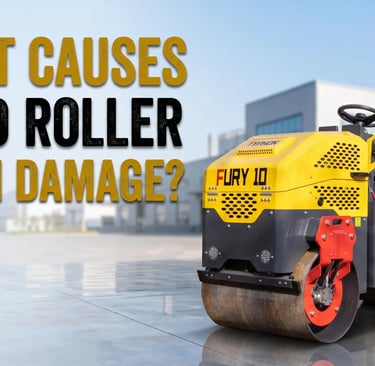
A paving crew finishes a long day compacting a fresh asphalt lift and parks the roller on site overnight without cleaning the drum. By morning, hardened asphalt has bonded to the steel, and the first pass the next day drags that buildup across the mat, gouging the fresh surface and leaving ridges that fail inspection. The operator scrapes at the drum for an hour, then discovers a shallow dent from a chunk of curb debris he rolled over the day before, which now prints a repeating mark into every pass. A machine that was working fine the day before has become the reason the whole section needs redoing, and the repair bill for the drum lands on top of it. The roller was capable. The care behind the drum wasn't.
Drum damage rarely announces itself with a single dramatic failure. It builds from neglected cleaning, rough operation, and overlooked wear until a scratched, dented, or corroded drum starts ruining the very surfaces it's meant to finish. The good news is that nearly every cause is preventable once you know what drives it. This post walks you through what actually damages a road roller drum and how to stop it: the operating habits that scar and dent the steel, the material and buildup problems that eat away at it, the corrosion and wear that creep in over time, and the maintenance choices that keep a drum smooth and true. Sort these out, and your drum keeps delivering clean, spec-quality compaction.
Operating Habits That Scar and Dent the Steel
Most drum damage traces straight back to how the machine is run. A roller drum is a precisely shaped steel surface, and the way an operator handles it decides how long that surface stays true. Correcting a few habits protects the drum more than any repair ever will.
Rolling Over Debris and Hard Objects
The fastest way to dent or gouge a drum is to roll over something it can't flatten. Curb fragments, broken concrete, rebar ends, loose rock, and dropped hardware all press into or scar the steel under the machine's full weight. A single hard object can leave a dent that then prints a repeating mark into every pass afterward.
Clear the path before you compact. Walking the area for debris and keeping the work zone tidy costs a few minutes and prevents a permanent flaw. A quick roller drum surface inspection before each shift also catches early dents before they worsen, so you fix the cause rather than living with the mark it leaves behind.
Aggressive Turns and Sudden Direction Changes
How a roller changes direction stresses the drum and its bearings. Sharp turns while the drum is loaded twist and scrape the steel against the surface, and slamming from forward to reverse shocks the drum edges and the drive components. Over time, that rough handling wears the drum unevenly and loosens what holds it true.
Make direction changes gradual and deliberate. Ease into turns, avoid pivoting hard on a loaded drum, and let the machine slow before reversing. Smooth operation keeps the drum surface even and spares the bearings and drive that keep it rotating true, which protects both the steel and everything behind it.
Vibrating on the Wrong Surface
Running the vibration system where it doesn't belong punishes the drum. Vibrating on a hard, unyielding surface like cured concrete or bedrock bounces the drum against an unforgiving base, hammering the steel and shocking the internal components. That misuse cracks welds and damages the vibration mechanism over time.
Match the vibration to the material and the moment. Switch it off when crossing hard surfaces, turning, or sitting still, and only engage it on the material it's meant to compact. Understanding when your drum vibration frequency should be active protects the drum from needless pounding and keeps the vibratory system working for its full life.
Takeaway:: rolling over debris, aggressive turns, and vibrating on the wrong surface are the quickest ways to scar, dent, and shock a drum, so disciplined operation is your first and cheapest line of defense.
Material Buildup and Bonding That Eats the Surface
Beyond how the machine moves, what sticks to the drum does real harm. Compaction materials bond to steel and, left in place, damage the surface and the finish it produces. Managing buildup keeps the drum clean and the mat smooth.
Asphalt Bonding to a Dirty Drum
Hot asphalt loves to stick to a bare steel drum, and once it hardens it becomes both a finish problem and a surface hazard. A drum caked with cooled asphalt drags across the fresh mat, tearing and marking it, and the hardened chunks can pit the steel when they finally break free. A dirty drum ruins the work and slowly degrades itself.
Prevention starts with a release agent and steady cleaning. Keeping the drum coated with an approved release agent and the water spray system flowing stops asphalt from bonding in the first place. Following a proper drum cleaning schedule at the end of every shift, before buildup hardens overnight, keeps the surface clean and the mat flawless.
Failed Water Spray and Scraper Systems
The water spray bars and scraper blades exist specifically to keep the drum clean, so when they fail, damage follows fast. Clogged spray nozzles let the drum run dry and asphalt bonds instantly, while worn or misadjusted scrapers stop clearing buildup and let it accumulate into a surface-marking layer.
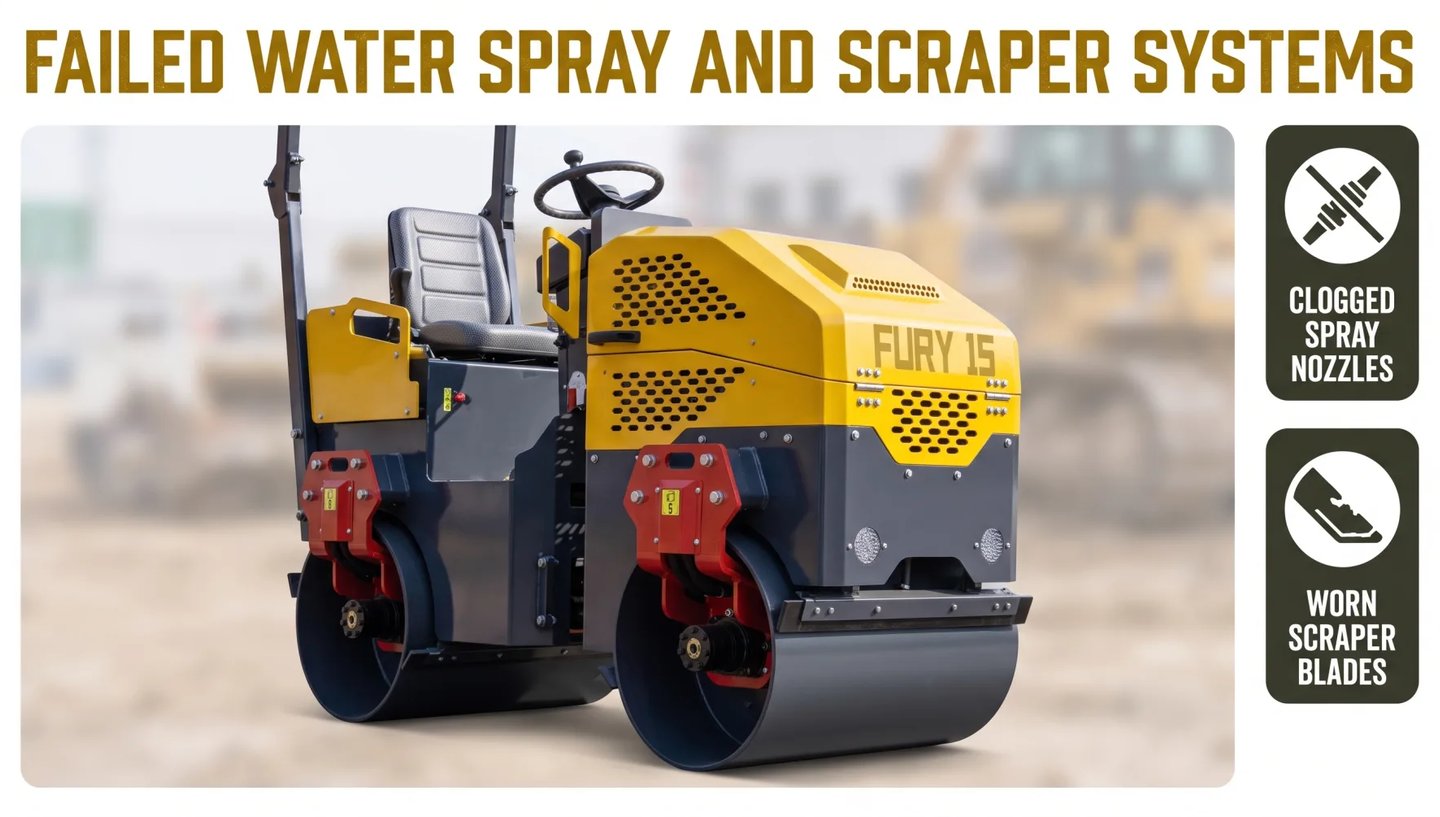
Check these systems as part of your routine. Confirm every nozzle sprays freely, keep the water tank filled with clean water, and inspect the scraper blades for wear and proper contact against the drum. A spray and scraper system in good order prevents most buildup damage before it ever starts, so treat these small parts as essential rather than optional.
Dried Concrete, Soil, and Mixed Debris
Asphalt isn't the only material that bonds. On soil and aggregate work, wet clay and fine material cake onto the drum and dry into a hard, uneven crust that ruins compaction uniformity. On mixed sites, splashed concrete or slurry can cure onto the steel into a stubborn deposit that's tough to remove without scratching.
Clean the drum before deposits harden. Wet material scrapes off easily, but the same material left to dry overnight bonds far tighter and often needs aggressive removal that risks scarring the steel. Making end-of-shift cleaning automatic, whatever the material, keeps the drum smooth and prevents the buildup that forces harsh scraping later.
Takeaway:: asphalt bonding, failed spray and scraper systems, and dried soil or concrete all attack the drum surface, so consistent cleaning and healthy cleaning systems keep the steel smooth and the compaction clean.
Corrosion and Wear That Creep In Over Time
Not all drum damage is sudden. Some of the most expensive problems develop slowly through corrosion and steady wear that go unnoticed until the surface is compromised. Catching these early keeps a small issue from becoming a drum replacement.
Rust From Moisture and Poor Storage
Steel drums rust when moisture sits on them, and a roller stored outdoors uncovered is exposed to rain, dew, and humidity every day it's idle. Surface rust roughens the drum, and left unchecked it pits the steel, ruining the smooth finish the drum needs to lay a clean mat.
Storage habits make the difference. Wiping the drum dry, applying a protective coating before long idle periods, and storing the machine under cover or indoors all slow corrosion dramatically. A drum kept dry and protected stays smooth for years, while one left exposed roughens and pits far faster than its working hours alone would explain.
Uneven Wear and Loss of True Shape
A drum must stay perfectly round and even compact uniformly, but hard use gradually wears it out of shape. Constant work, rough handling, and repeated impacts can flatten spots or wear one area more than another, so the drum no longer rolls true. That lost shape shows up as uneven density and a rippled surface.
Inspect the drum's shape periodically, not just its surface. Checking the drum roundness and wear against its original profile reveals gradual distortion before it ruins your compaction results. A drum caught early while it's slightly out of true can often be reconditioned, while one left to wear badly may need full replacement.
Bearing and Component Failure
The drum depends on bearings and internal components to rotate smoothly and stay aligned, and when those fail, the drum itself suffers. Worn drum bearings let the drum wobble or bind, which stresses the steel, wears it unevenly, and can damage the mounting over time. A failing vibration mechanism transmits harmful shock straight into the drum.
Listen and feel for the warning signs. Unusual noise, vibration that feels rough or off, a drum that binds or drags, or visible play in how it sits are all signal component trouble worth addressing before it damages the drum. Fixing a worn bearing early costs a fraction of repairing the drum damage a neglected one causes.
Takeaway:: rust from poor storage, uneven wear that costs the drum its true shape, and failing bearings or vibration components all degrade a drum slowly, so regular inspection and dry storage stop creeping damage before it becomes a replacement.
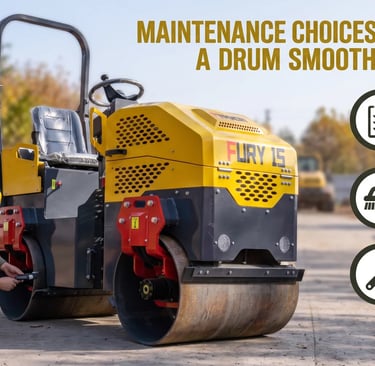
Maintenance Choices That Keep a Drum Smooth and True
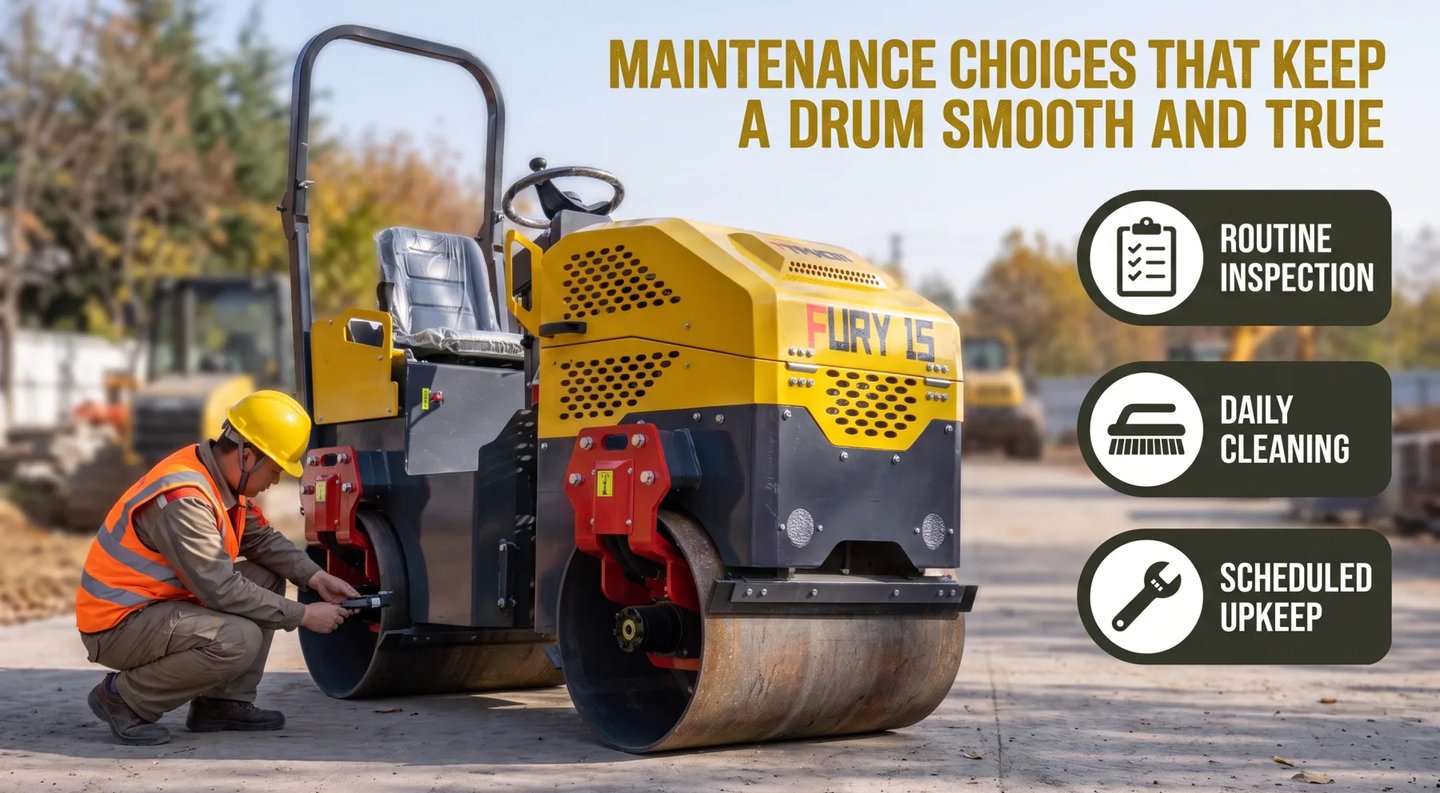
Everything above comes back to maintenance, because a well-cared-for drum resists nearly every cause of damage. Steady upkeep costs a fraction of a repair and keeps the machine laying quality compaction shift after shift. These habits are where reliability is truly won.
Build a Daily Drum Inspection Routine
The cheapest protection is a habit of looking closely every day. Before and after each shift, scan the drum surface for dents, gouges, scratches, cracks, and early rust, and confirm it's clean and free of hardened buildup. Problems caught on day one are minor fixes, while the same problems ignored become surface-ruining flaws.
Make the check systematic so nothing slips by. Look over the drum face and edges, test the water spray and scrapers, feel for rough rotation, and note anything new since the last shift. A consistent inspection turns you into someone who prevents drum damage rather than someone who discovers it after a section fails.
Clean, Coat, and Store the Drum Properly
Three simple habits guard the drum between jobs:
Clean it every shift. Remove asphalt, soil, or concrete before it hardens, since wet material scrapes off easily while dried buildup demands harsh removal that scars the steel.
Coat it for protection. Apply an approved release agent during work to stop bonding, and a protective coating before idle periods to hold off rust.
Store it dry and covered. Keep the machine out of standing moisture and under cover whenever possible, since exposed storage is a leading cause of avoidable corrosion.
None of this is difficult or expensive, but together these habits prevent the buildup and corrosion that account for a large share of drum damage.
Service Components and Know When to Recondition
The drum's supporting systems need scheduled attention too. Maintain the water spray system and scraper blades, service or replace drum bearings on schedule, and keep the vibration mechanism working within spec, since a fault in any of these transmits damage into the drum itself. Following the machine's service intervals protects the drum as much as the components.
Know the line between routine care and professional repair. Minor surface rust, cleaning, and adjustments are well within reach, but a dented, cracked, badly corroded, or out-of-round drum needs a qualified assessment. Reconditioning a drum caught early often restores it, while a neglected one may require replacement, so leaning on dependable service keeps a small problem from becoming a costly one.
Takeaway:: a daily inspection routine, consistent cleaning, coating, and dry storage, plus scheduled component service and timely reconditioning keep a drum smooth and true for years, so treat drum maintenance as the backbone of reliable compaction.
Frequently Asked Questions
What is the most common cause of road roller drum damage?
Rolling over debris and hard objects is the leading cause, since a single curb fragment, rock, or rebar end pressed under the machine's full weight leaves a dent that prints a repeating mark into every pass. Material buildup from poor cleaning runs a close second, with hardened asphalt and dried soil degrading the surface over time. Clear the work area before compacting, inspect the drum each shift, and clean it at the end of every day.
How often should I inspect my road roller drum?
Inspect the drum before and after every shift, checking for dents, scratches, early rust, and any hardened buildup, and confirm the spray and scraper systems are working. Add a periodic deeper check of the drum's roundness and the condition of its bearings and vibration components. This two-level routine catches both sudden damage and gradual wear before either ruins your compaction results.
Can a dented or damaged drum be repaired, or does it need replacing?
It depends on the severity and how early you catch it. Minor surface rust, light buildup, and small imperfections are often correctable with cleaning and care. A drum that is slightly out of round or lightly dented can frequently be reconditioned by a professional. However, a heavily dented, cracked, badly corroded, or severely worn drum may need full replacement. Catching problems early through regular inspection is what usually keeps a drum in the repairable range rather than the replacement one.
Conclusion
Road roller drum damage almost never comes from bad luck alone, since it builds from causes you can control: rolling over debris, taking aggressive turns, and vibrating on hard surfaces that dent and shock the steel, material like asphalt, soil, and concrete bonding to a dirty drum and tearing the finish, and the slower creep of rust from poor storage, uneven wear that robs the drum of its true round shape, and failing bearings or vibration components that transmit harm straight into the surface, so the reliable way to protect a drum is to run the machine with discipline, clear the path and ease your turns, keep the water spray and scraper systems healthy so buildup never hardens, clean the drum every shift before deposits set, coat and store it dry to hold off corrosion, and inspect both the surface and the drum's shape and components on a steady schedule, because a drum caught early while a problem is small is a quick fix or a straightforward reconditioning, while one left neglected becomes a ruined mat, a failed inspection, and a costly replacement all at once, and getting that care right keeps your compaction smooth, uniform, and spec-compliant job after job; when you are ready to source a dependable machine, replacement parts, or the service support to keep your drum smooth and true, reach out to a trusted equipment specialist who can pair reliable equipment with the results your projects depend on.
Leading provider of heavy equipment solutions in the US such as mini excavator diggers and skid steers. When looking for a reliable mini excavator supplier, look for New Excavator. Quality compact mini excavators backed by a strong after sales service and a widespread inventory of spares.
Contact us for equipment inquiries
© 2026. All rights reserved USA EXCAVATORS
Follow us now