Free Shipping Sitewide | 1 Year Warranty

Zero Tail Swing vs Conventional Excavators: Maneuverability and Stability
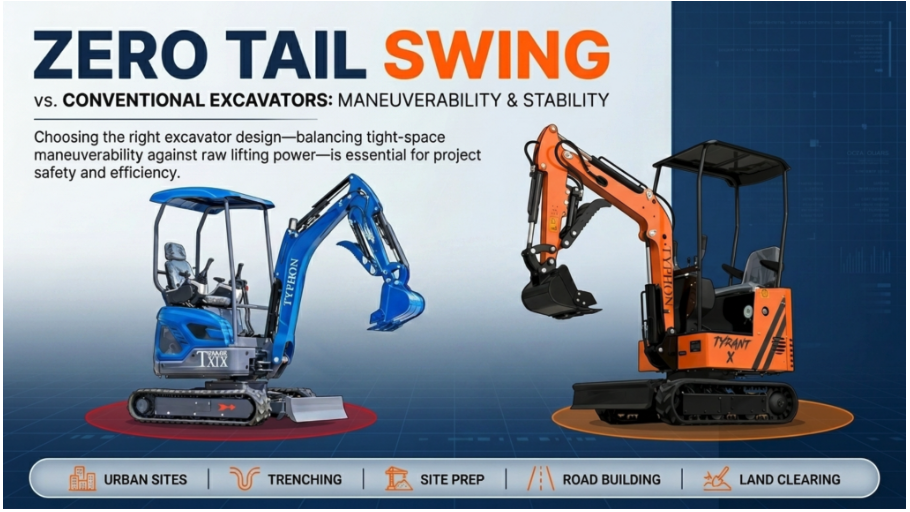
Choosing the wrong excavator for a job site can cost you time, money, and even safety. The space you have to work in and the lifting power you need both shape that decision.
6/27/20263 min read
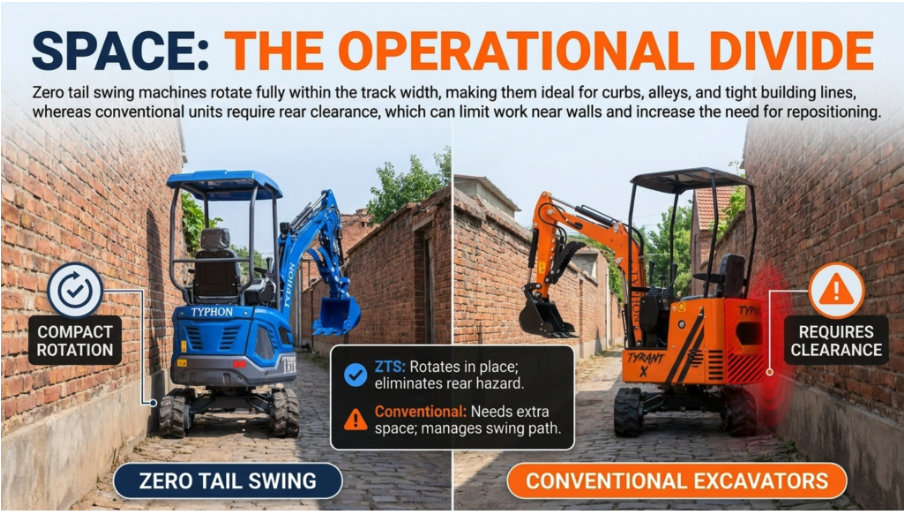
Required exclusion zones: supervisors often barricade the area behind the machine.
Spotter reliance: a dedicated spotter is frequently needed in tight or busy quarters.
Constant awareness: operators must track what lies in the swing path at all times.
Both machines can be operated safely with proper training and discipline. The difference is that a zero tail swing design reduces the burden of managing rear clearance, which matters most when people are working close by.
Where Each Machine Works Best
Each design earns its keep in different environments, and matching the machine to the setting is what drives real efficiency. Zero tail swing excavators are built for tight, busy, and people-heavy job sites. They excel in urban environments where buildings crowd the work area, in residential projects where homes and landscaping leave little room to maneuver, and in confined utility trenches where the machine must operate close to existing infrastructure. Anywhere maneuverability ranks as the top priority, the compact rotation of a zero tail swing unit lets crews work productively in spaces that would frustrate a larger machine.
Conventional excavators shine on open ground where space is plentiful and raw power matters more than agility. With room to swing freely, the extended counterweight becomes a pure advantage, delivering the lifting capacity and stability needed to move large volumes of material quickly.
Here is how the ideal use cases break down:
Zero tail swing excels at: urban job sites, residential builds, utility trenching, roadside work, and any space with structures or workers close by.
Conventional excels at: large land-clearing, mass excavation, road building, and major site development with open ground.
Power-first tasks: conventional machines handle repeated heavy lifting at full reach more comfortably.
Maneuverability-first tasks: zero tail swing units win where every inch of clearance counts.
The contrast becomes obvious when you picture the two settings side by side. A contractor digging footings for a downtown addition, hemmed in by sidewalks and adjacent buildings, will get far more done with a zero tail swing unit. That same contractor clearing acreage for a new subdivision would be better served by a conventional machine that can dig deep, lift heavy, and reach far. Neither design is universally better; each is built to dominate a specific type of work.
Choosing the Right Tool for the Job
The decision between a zero tail swing and a conventional excavator ultimately comes down to an honest look at your typical projects. Start by examining where you work most often. If your jobs regularly place you in tight alleys, residential lots, urban corridors, or congested sites with workers nearby, the compact rotation and built-in safety margin of a zero tail swing machine will repay the investment every single day. If your work tends toward open fields, large excavation sites, and heavy material handling with plenty of room to operate, a conventional machine gives you the power and stability those tasks demand.
Power needs deserve equal weight in the decision. Be realistic about how hard you push your equipment. Crews that constantly lift heavy loads at full reach benefit from the superior leverage of a conventional counterweight, while those handling lighter, more varied tasks rarely notice the slight capacity reduction of a zero tail swing design.
To guide your choice, weigh these questions:
Where do you work most? Tight, crowded sites point to zero tail swing; open ground favors conventional.
How hard do you lift? Frequent heavy lifting at full reach leans conventional.
Who works nearby? Sites with constant foot traffic benefit from the safer zero tail swing profile.
What is your job mix? A split workload may justify owning both or renting the right one as needed.
For many contractors, the choice reflects the balance of their overall workload rather than a single project. Whatever path you choose, base the decision on the work in front of you. Match the machine's strengths to your most common conditions, and you will gain efficiency, protect your crew, and get the most value from every hour the excavator spends on site.
Conclusion
Both zero tail swing and conventional excavators are excellent machines, but they are built to solve different problems. Zero tail swing units deliver unmatched maneuverability and a safer profile in tight, crowded spaces, while conventional models offer superior lifting power and stability on open ground. The right choice depends on how much room you have to work and how much raw power your tasks demand. Review the job sites you tackle most often, weigh your space against your lifting needs, and select the design that keeps your operation running at its best.
Leading provider of heavy equipment solutions in the US such as mini excavator diggers and skid steers. When looking for a reliable mini excavator supplier, look for New Excavator. Quality compact mini excavators backed by a strong after sales service and a widespread inventory of spares.
Contact us for equipment inquiries
© 2026. All rights reserved USA EXCAVATORS
Follow us now